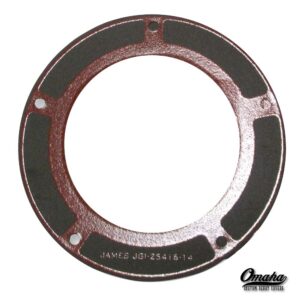
A derby cover is a clutch access cover found on Harley-Davidson motorcycles. It is found on the left side of the motorcycle, roughly at ankle-level. Depending on the year and model of Harley-Davidson, the derby cover will be held on with three, four, five or six mounting bolts, and will be between six and 7.75″ in diameter.
Function of the Derby Cover
The primary function of the derby cover is protection. It shields the clutch components from external elements that could cause damage or wear over time. Dust, moisture, and road debris can compromise the clutch’s performance if not adequately protected. By covering these critical components, the derby cover ensures the longevity and smooth operation of the clutch.
Beyond protection, the derby cover also plays a significant role in the motorcycle’s aesthetics. Manufacturers and aftermarket suppliers offer derby covers in various designs, finishes, and materials, allowing riders to add a personal touch to their bikes.
This photo of my personal bike shows the location of the derby cover:

Just for fun, I put “What is a derby cover on a motorcycle” into ChatGPT, and it gave me this:
The Significance and Purpose of a Derby Cover on a Motorcycle
Motorcycles, beyond their mechanical intricacies and roaring engines, often embrace a culture that revolves around aesthetics, personalization, and a sense of identity. One of the elements that enthusiasts frequently focus on is the “derby cover.” A seemingly simple component, the derby cover holds more significance than meets the eye. It embodies both functional and symbolic qualities, becoming a canvas for individual expression and a reflection of a motorcycle’s soul.
A derby cover, also known as a clutch cover or primary cover, is a protective plate situated on the left side of a motorcycle’s engine. Positioned over the primary drive, which consists of the clutch assembly, primary chain, and associated components, the derby cover plays an essential role in safeguarding these crucial parts from debris, dirt, and potential damage. However, its functional importance extends beyond mere protection.
Traditionally, the term “derby” refers to a horse race, specifically the Kentucky Derby—an event characterized by speed, elegance, and prestige. This nomenclature lends itself to the world of motorcycles, where the derby cover encapsulates the spirit of racing, the allure of open roads, and the elegance of engineering. In this sense, the derby cover bridges the gap between functionality and aesthetics, emphasizing that form and function need not be mutually exclusive.
From a technical perspective, the derby cover shields the primary drive components from dust, moisture, and road debris, which could otherwise impair the functionality of the clutch and the primary chain. Given its proximity to the road, these parts are vulnerable to environmental elements that can hamper performance and lead to premature wear. The cover’s presence ensures that these components remain in optimal condition, thereby extending the longevity of the motorcycle’s mechanical heart.
However, it is the artistic potential of the derby cover that truly sets it apart. Motorcycle culture has evolved into a realm where customization is as vital as horsepower. Riders seek to imprint their personalities on their machines, transforming them into extensions of themselves. The derby cover provides a canvas for this personal expression. From intricate engravings to elaborate paintings, riders can adorn their derby covers with artwork that speaks to their individuality, passions, and experiences.
Customizing a derby cover offers a glimpse into the rider’s soul—a visual story that might reflect their love for nature, their affiliation with a particular community, or even a homage to a cherished memory. This transformation of a functional part into a work of art holds deep significance within the motorcycle community. It unites riders under the banner of creativity, fostering connections that go beyond the shared love for two-wheeled machines.
Furthermore, the act of customizing a derby cover involves a certain level of craftsmanship and dedication. Riders often collaborate with skilled artisans or invest time and effort into learning intricate techniques themselves. This process of creation, whether done solo or collaboratively, adds another layer of value to the finished piece. It is a testament to the dedication and passion that riders have for their motorcycles and the culture that surrounds them.
In conclusion, a derby cover on a motorcycle is far more than a mere protective plate. It stands as a testament to the marriage of form and function, safeguarding crucial components while also serving as a canvas for artistic expression. This seemingly modest component encapsulates the spirit of customization, individuality, and shared passion within the motorcycle community. Whether adorned with intricate engravings, vivid paintings, or minimalist designs, the derby cover becomes a reflection of a rider’s journey, making it an integral part of the motorcycle’s identity and the rider’s story. Just as the Kentucky Derby is a celebration of speed, elegance, and competition, the derby cover celebrates the journey, the open road, and the unique stories that every rider carries with them.
ChatGPT
Mostly, that’s at least in the ballpark of correct, but it completely missed the point of the word “derby”. The fact that derby covers are called derby covers has nothing to do with horse racing or any of that. I’ll talk about why they are called derby covers in a future post.